Ghanaian Youth Call for Ring-Fenced Funding for Youth Development

Young people across Ghana have called on government to establish a legally protected National Youth Development Fund, arguing that the creation of a dedicated Ministry of Youth Development and Empowerment must now be matched with sustainable and predictable financing.
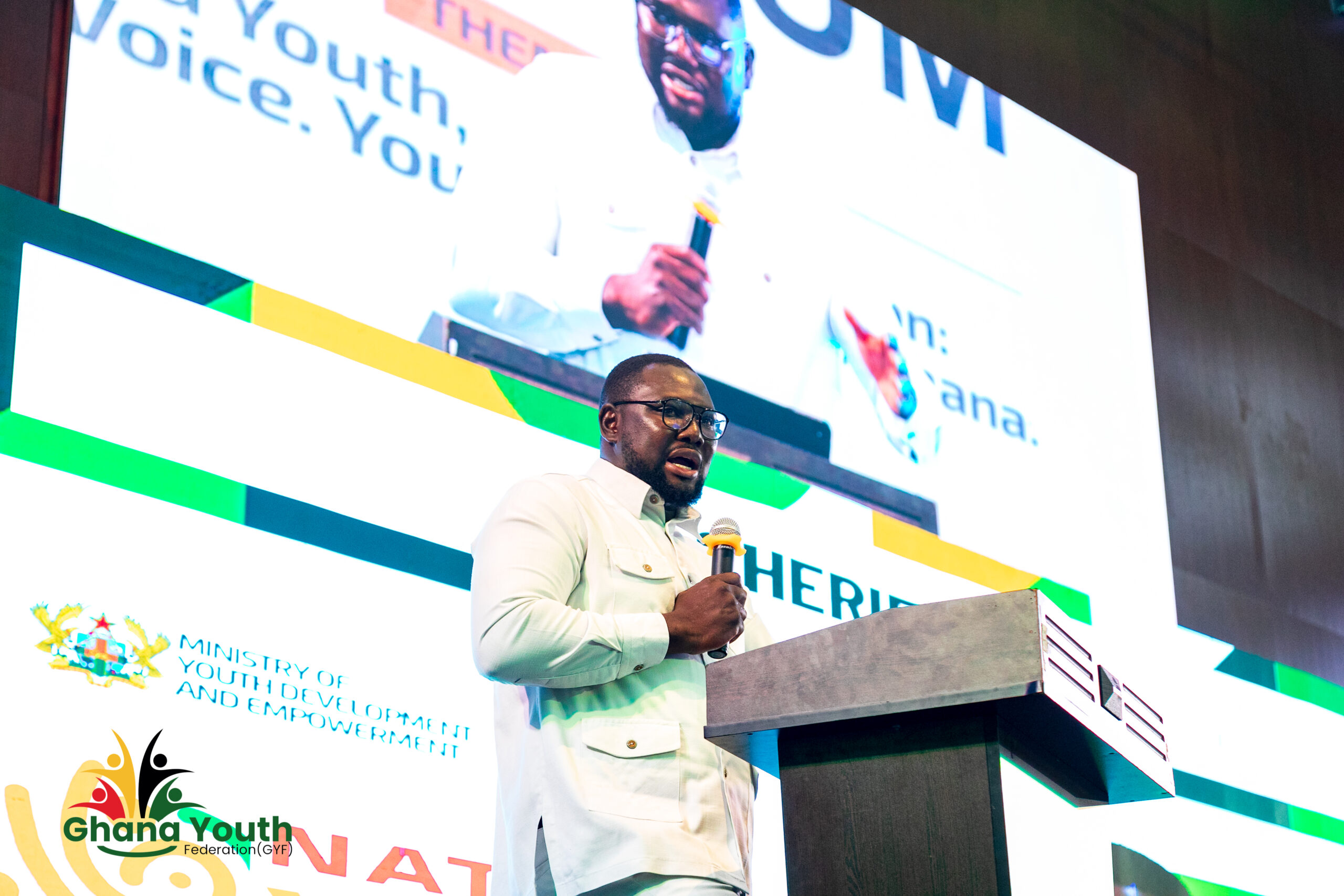
Speaking at the National Youth Forum, President of the Ghana Youth Federation, Sherif Ghali, welcomed government’s decision to establish a standalone ministry responsible for youth development, describing the move as overdue and worthy of support irrespective of political affiliation.
However, he said the creation of the Ministry must be followed by a fundamental rethink of how Ghana finances youth development.
Citing the Ministry’s 2025 Programme-Based Budget, Ghali noted that although the Ministry and its departments had an allocation of GH¢2.789 billion, substantial portions were drawn from statutory and earmarked sources including the District Assemblies Common Fund, Communication Service Tax and GETFund. He argued that this leaves the country’s youth development architecture heavily dependent on funding streams it does not directly control.
“A ministry that depends on money it cannot command is not funded. It is hopeful.”
The Federation therefore proposed the establishment, by law, of a National Youth Development Fund financed by a dedicated 2% of total national revenue, with resources paid directly into the Fund to provide predictable financing for youth development.
“We are not asking for a bigger share of somebody else’s purse. We are asking for a purse.”
The proposal formed part of a five-point youth agenda presented at the Forum.
Beyond ring-fenced financing, young people called for an annual Youth Budget Statement showing, in plain language, how much has been allocated, released and spent by each youth-serving agency. They also called for greater transparency around beneficiaries of major government youth interventions, including Adwumawura, the National Apprenticeship Programme and programmes implemented through the Youth Employment Agency.
The youth further proposed that the National Youth Forum be institutionalised with a statutory mandate and permanent structure, protecting it from changes in governments and political leadership.
The Federation also called for a Presidential Youth Dialogue before the end of the year, asking the President to dedicate a day to a substantive, on-the-record engagement with young Ghanaians.
“Not a durbar. Not a photograph. A dialogue, on the record, where we bring our figures and you give us your answer.”
The intervention comes against what the Federation described as an urgent socioeconomic challenge. The address cited youth unemployment at 21.9%, compared with a national average of 12.8%, and said nearly two million young Ghanaians aged 15–35 are neither in education, employment nor training.
Despite the concerns, the Federation deliberately avoided framing the Forum as an attack on the current government. Ghali argued that inadequate youth financing had persisted under successive administrations and should therefore be treated as a structural national problem rather than a partisan one.
“We are not describing a party. We are describing a habit.”
He challenged youth organisations themselves to approach government with evidence, credible proposals and consistency rather than reducing youth advocacy to political confrontation.
The Federation committed itself to criticising policies rather than personalities, proposing alternatives before opposing government decisions and maintaining the same standards regardless of which political party controls the Ministry.
The central message from the Forum was therefore clear: Ghana has taken an important step by creating a dedicated Youth Ministry; the next step is to adequately and sustainably fund it.
With more than 12 million Ghanaians between the ages of 15 and 35, the Federation argued that youth development should no longer depend predominantly on fragmented or unpredictable funding arrangements.
The address ended with a direct message to government and young people alike:“Ghana does not have a youth problem. Ghana has 12 million young people and one decision to make about them. We have already made ours. We are staying. We are building. We are ready.”